When you’re reviewing backup and recovery solutions for databases, there are a few key areas to focus on.
First, understand the retention periods. Now, keep in mind that Azure offers short-term retention for up to 35 days and long-term retention for up to 10 years. Remember those numbers. You’ll want to know how each is appropriate, whether it be short-term, which is great for operational recovery, while long-term is more for compliance and archiving.
Next, study the different restoration methods. You should be able to explain how to restore a database to a specific point in time, how to recover a deleted database, and how to restore it to a different region if you need to.
Also, be familiar with restoring from long-term backups, whether it’s a single database or part of an elastic pool.
When reviewing the types of backups involved, keep in mind you have full, differential, and transaction-log backups. These are automatically managed in Azure SQL database and SQL Managed Instances. But you still need to understand how they work and when they’re used.
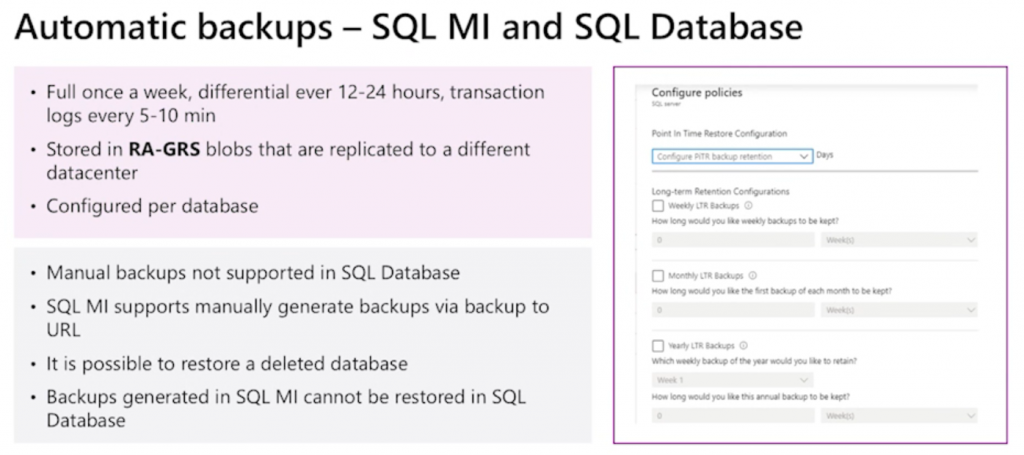
Also make sure you know how geo-redundant storage plays into your overall recovery strategy. Keep in mind that this ensures your backups are available even if the region goes down. Understanding these concepts will help you confidently answer questions about database protection, recovery planning, and compliance on your exam.