When studying Azure SQL purchasing models, make sure you understand the difference between the DTU and the vCore models.
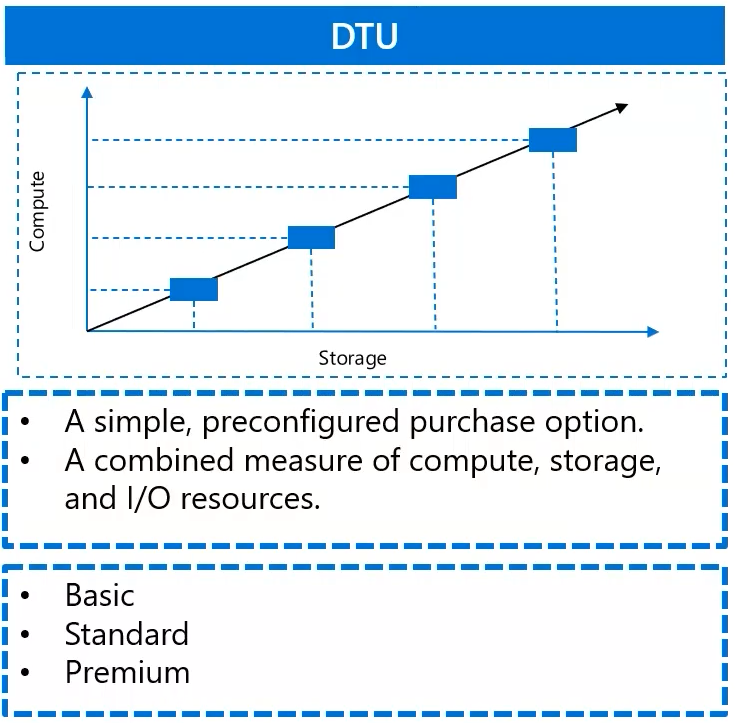
The DTU model, short for Data-base Transaction Unit, is a simplified bundled option. It combines things like your compute, storage and I/O into a single package which makes it easier to choose that service. Remember, there are three tiers; those are Basic, Standard, and Premium, and as you move up the tiers, both performance and storage capacity increases. Remember, you’re going to see a lot of scenario-based questions, so these are the type of things that you’ll need to know.
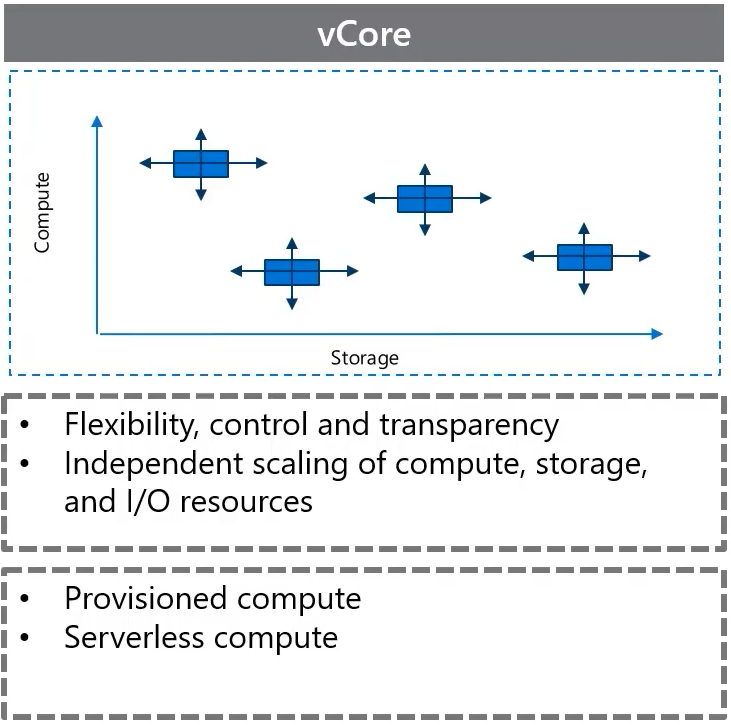
And then we have the vCore model, which gives you a lot more flexibility and greater control. It lets you control scale, compute, and storage independently; you’ll need to know that. And you want to know that the two provisioning types that you have are provisioned compute, where resources are always allocated and serverless compute, which automatically scales based on usage and pauses during inactivity which saves you costs.
For your exam, focus on when to use each model. Now, keep in mind, DTU is great for predictable workloads and simplicity, while vCore is better for customization, transparency and aligning with your on-prem type specifications. Also, be familiar with how each model impacts performance, pricing, and scalability. These distinctions are likely to show up in scenario-based questions.