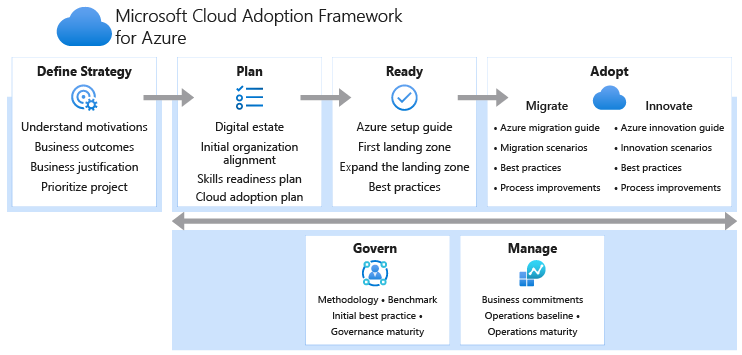
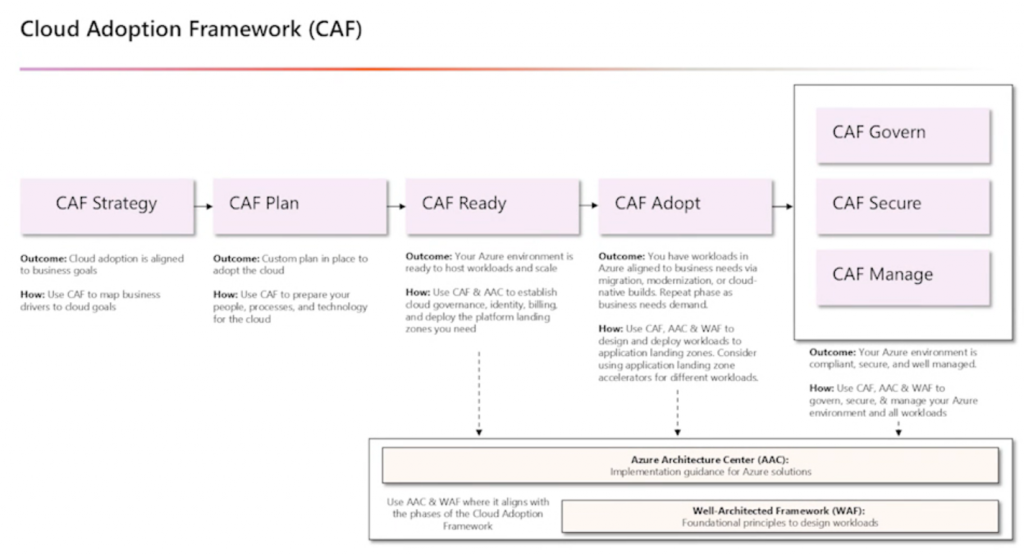
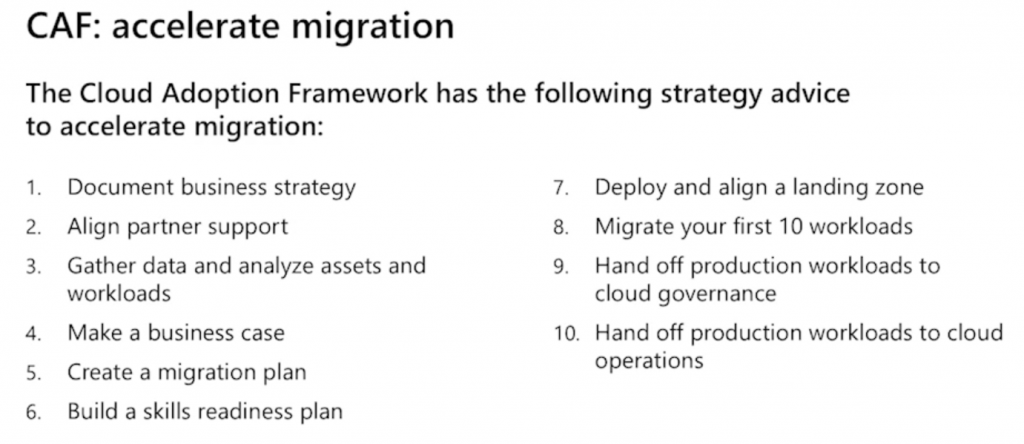
Spend time on migration strategies using the Microsoft Cloud Adoption Framework for Azure. This framework guides you through planning, readiness, migration, and governance. If you’re not familiar with this framework, it’s highly recommended that you review it.
When studying cloud migration strategies, focus on the three key phases of the strategies, which are Plan, Ready, and Adopt.
This diagram illustrates Cloud Adoption Framework methodologies within a cloud adoption lifecycle.
If you start with the Plan phase, the goal here is to assess workloads. We’re going to evaluate things like cost, architecture, and the tools we’ll need for deployment.
And then we go to the Ready phase, where those workloads are actually deployed using models like infrastructure, platform, or software as a service, or even cloud native solutions, depending on the needs of the application.
The third phase you’ll need to remember is the Adopt phase. Here, it’s all about finalizing the migration, testing, optimization, documenting, training your teams, and handing things off for governance and security.
So pay attention to the idea of migration waves and iterations. These are things that help you break up your migration to more-smaller chunks.
Understanding how these phases work together and how to apply them in real world scenarios is key to answering migration related questions with confidence on your exam.
The Cloud Adoption Framework migration model is a structured roadmap that helps organizations successfully adopt Azure and integrate it into their existing IT environments. It provides best practices and guidance to help organizations make the right decisions for their business throughout the cloud journey.
Plan the migration defines the specific order, timing, and approach for migrating workloads to Azure. This plan translates high-level migration strategies into actionable deployment sequences. It builds on the cloud adoption plan by addressing tactical decisions such as workload prioritization, migration sequencing, and data transfer methods.
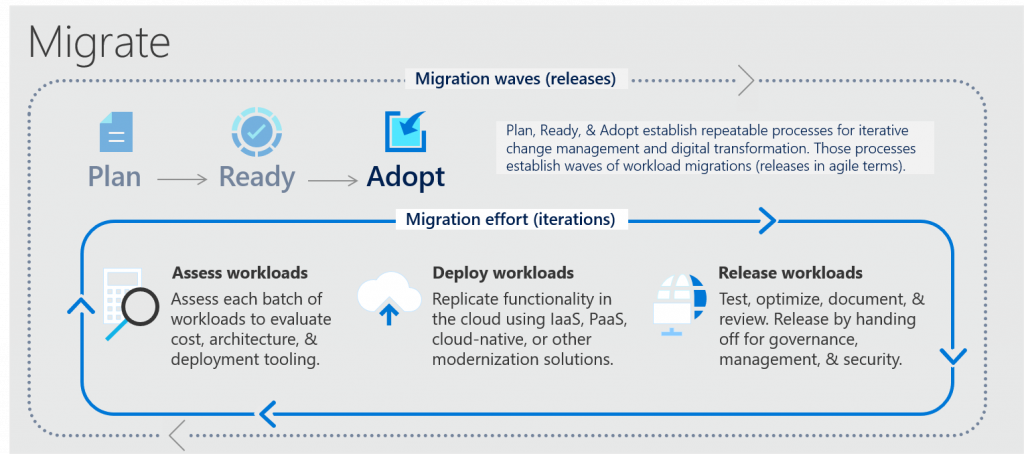
Three phases or efforts:
| Effort | Description |
|---|---|
| Assess | Assess your workloads to determine costs, modernization, and required deployment tools. |
| Deploy | After you assess your workloads, the existing workload functionality is replicated (or improved) in the cloud. |
| Release | After your workloads are deployed (replicated) to the cloud, you can test, optimize, and document your migrated workloads. When you’re ready, you can release the workloads to your users. During the Release effort, be sure to hand off the workloads to governance, operations management, and security teams for ongoing support of the workloads. |